

The second death
Time passes, and so do we

Does it seem to you like our days are getting shorter?
In fact, there were roughly four fewer seconds of daylight today at my Los Angeles area latitude than we had here yesterday. Those of us north of the equator started getting shorted on sunshine after the summer solstice, which was Sunday.
That’s probably not the best explanation, though, for why time seems to be flying. It also has something to do with the fact that we’re getting older, so each year is a smaller percentage of our lives than the one that came before.
When we were kids, a year seemed like forever. Now, we baby boomers just tick them off, one after another.
I went to a friend’s funeral on Monday, and I’ve been thinking about how that, too, marked the passage of our most precious resource.
A rabbi who officiated at the ceremony told us that every person eventually dies twice — once on the day of his actual death, and the second time on the last day his name is mentioned in the world.
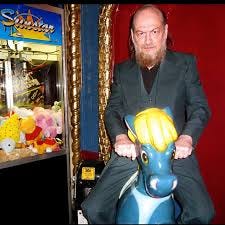
Ron Zwang and I were never close. I knew him only virtually at first, through the Writers Guild’s electronic bulletin board that predated Instagram, Facebook, even public use of the internet itself. That BBS was a great development, bringing thousands of isolated writers together — at least those of us with dial-up modems — to chat and compare notes about the business whenever we chose.
Of course, writers being who we are, some of those BBS conversations got into so much name-calling, rage, and threats of legal action that the Guild eventually quit hosting the platform.
But the idea was too good to die, and it evolved into new, private iterations not dependent on the Guild. Ron was a collegial part of the electronic repartee and distinguished himself among the hundreds, if not thousands of world-class screenwriters with an offbeat wit that stood out.
The next incarnation of the BBS was called PAGE. It was much smaller than the WGA BBS, and various groups of us would sometimes get together at local restaurants, often meeting for the first time, though we were already familiar with each others’ online personalities. At one or two of these soirees, there was a piano present, and Ron would knock out some unbelievable bluesy, jazzy, rock accompaniment that left me awestruck.
The better we got to know Ron, the more we realized his persona as a cantankerous crank, though well earned, was a small part of who he was. We sometimes referred to him as Der Zwangle, an endearing, Germanic take on his last name that reflected an affection we shared for him.
His main calling was as a writer, not a musician. He had come to L.A. from New York after selling jokes to Joan Rivers, and he later wrote scripts and TV pilots for whoever would buy them.
Often, no one would. No potential buyers would even read a spec feature he co-wrote, The Clumsy Idiot — that is, until he decided to change its name. As Bram Stoker’s The Clumsy Idiot, he got it read and optioned. (Stoker, of course, had nothing to do with it.)
Above all, Ron was a storyteller. The rabbi’s observation about a person’s second death got me thinking about that. Most of us leave behind family photographs, old letters, some fading memories.
Writers leave stories.
Ron left plenty of them. But one in particular has been retold for years among his PAGE friends whenever we gather and start swapping Hollywood war stories. If the rabbi was right, then every retelling pushes that second death farther into the future.
Forgive the length of this column, but I’d like to retell it in Ron’s words, with only minor edits for grammar:
I COULD HAVE BEEN A HOLLYWOOD STARLET
By Ron Zwang
The true story of the night Phil Spector threatened to kill me — and my friend — and some other people I didn’t know, and various passersby…
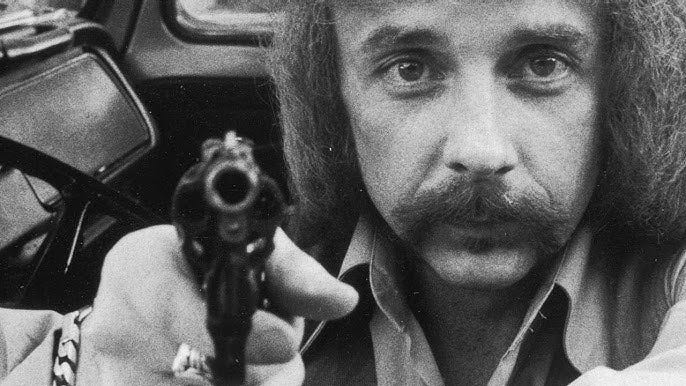
One morning in February, 2003, I got an odd voicemail from a friend. “You could have been a Hollywood starlet.” Strange message. But it didn’t end there. The next couple of messages, also from friends, didn’t make any immediate sense either. Then by the fourth message I got the news... Phil Spector had just been arrested for the murder of [Lana Clarkson,] a starlet he picked up at the House of Blues in Hollywood.
July, 1994: A female friend and I were coming out of the House Of Blues at closing when I saw a white Rolls Royce with its hood up. The chauffeur couldn’t get it going. Knowing nothing about cars but curious, I wandered over to help. The back door of the Rolls flew open and a little man burst out, pointing his finger at me. “I’m going to fuckin’ kill you. What do you want?! What do you want?!” he screamed.
I recognized him immediately. It was Phil Spector. As a legendary record producer for the Righteous Brothers, The Ronettes and John Lennon, among many others, he was a self-made millionaire by 21. He walked away from the music business after the commercial failure of his great record with Tina Turner, “River Deep, Mountain High.” Spector had a reputation of being a recluse. He resurfaced occasionally and on this occasion threatened to kill me.
“I’m going to fuckin’ kill you. What do you want?!” he shouted as the veins in his head were pounding.
“I could call the auto club and get you a jump start if you like.”
“That would be good. Thanks,” Spector calmly responded.
And so, for the next hour or so we hung out and talked. Actually he did most of the talking. Spector was dressed entirely in black and wearing a button on his jacket that read “Back To Mono.” He seemed to be on something. He was a mixture of hyper and tightly wound.
I was at the pay phone calling the auto club -- this was the mid-1990s, a primitive time long ago before every eight-year-old had a cell phone with caller ID. Meanwhile Phil was talking to my lady friend. Seems my new pal was telling her to lose me so she could continue the evening with him — alone.
He told her that he knew seven guys who could kill her. I was no longer special to Phil; he wanted to kill other people too. Actually quite a few people. He was threatening virtually everyone within earshot.
He rambled on about O.J. Simpson being innocent. He thought O.J.’s son did the murderous deed. At the time O.J.-mania was white hot, and unfortunately it was all anyone wanted to talk about. At least Spector had a unique take on it.
In retrospect, it’s interesting that Spector felt so strongly that O.J. wasn’t guilty, considering he’d soon be following in his celebrity homicide footsteps.
Suddenly, he went into a fairly good Jack Nicholson impression: “‘Phil. You gotta come down to the club tonight. It’s an Easy Rider reunion. Everyone will be there.’
“And Jack didn’t show,” Phil continued. “None of them fuckin’ showed. Peter Fonda and Dennis Hopper own the club, and even they didn’t show.”
Spector was pissed, but he shouldn’t have been: Fonda and Hopper owned a club all right — The Thunder Roadhouse across the street. Phil had gone to the wrong club.
I tried to steer him to the right venue. This was a man who didn’t like being corrected and stood his ground: Fonda and Hopper owned the House of Blues. I let it go. I didn’t want to end a friendship over simple facts.
Whenever a car passed on the street near us, his hand would automatically reach for his breast pocket. “Don’t worry,” he muttered as his eyes followed the passing car. “I’m packing heat.” Somehow the fact that the guy who threatened to kill me half an hour ago was carrying a gun wasn’t reassuring.
It was after 3 a.m. when the auto club finally got Phil’s Rolls running. At that point, Spector was in the middle of a furious rant about his lawyer, “Fuckin’ Marvin,” for leaving early. Not knowing how to react, I told him that seemed so unlike Fuckin’ Marvin. It turned out he was talking about famed divorce attorney Marvin Mitchelson. He invited my friend and me to join him in his Rolls to go with him to Fuckin’ Marvin’s house. The chauffeur caught my eye and gave me the slightest “No” gesture with his head. I was still tempted to continue the adventure but passed.
I kept thinking, “Are these the clothes I want to wear to my autopsy?”
I don’t know what Ron actually wore to his funeral, as his coffin was already closed. But I do know that if the darkness seems to be spreading these days, Der Zwangle’s first death is one of the reasons for some of us.
His second death, I suspect, will be a long way off.
Love this--thanks for posting.
Thanks for writing this. I just learned of Ron’s passing. We weren’t close but we shared some laughs virtually, and at many Writer Action lunches and gatherings. He loved to joke that we were related because Zwang included Wang.