

Staying alive -- barely
"The cute Bee Gee" has lost his brothers and his youthful looks, but his story makes for a good documentary

One of the great things about the abundance of television programming in the streaming era is the proliferation of well made documentaries on the pop culture artists of our time. Everyone from the Beatles and Stones to Megan Thee Stallion, Celine Dion and Pee-wee Herman has sat for long, in-depth interviews (or as with the Beatles through their estates, allowed old clips to be used), often revealing unflattering details to give audiences a more complete picture of the artists’ legacies.
In newspapers, magazines, and increasingly in television, celebrity profiles have always been a surefire way to grab an audience, but never have we consistently seen the star power we’re getting now. Take the recent lineup for Billy Joel: And So It Goes on HBO Max — Paul McCartney, Bruce Springsteen, Sting, Garth Brooks, Pink, even Itzhak Perlman sat for interviews, along with many others. Some of these efforts feel to an extent like vanity projects, financed by the studios and perhaps even by the artists themselves to sell records.
Still, they can be effective. All the Billy Joel testimony, plus the concert footage and conversations with Joel himself convinced me that he is, in fact, one of the great popular songwriters and musicians of recent times. He’s also kind of an insufferable jerk, which I don’t think he's proud of, but he seems to know is true.
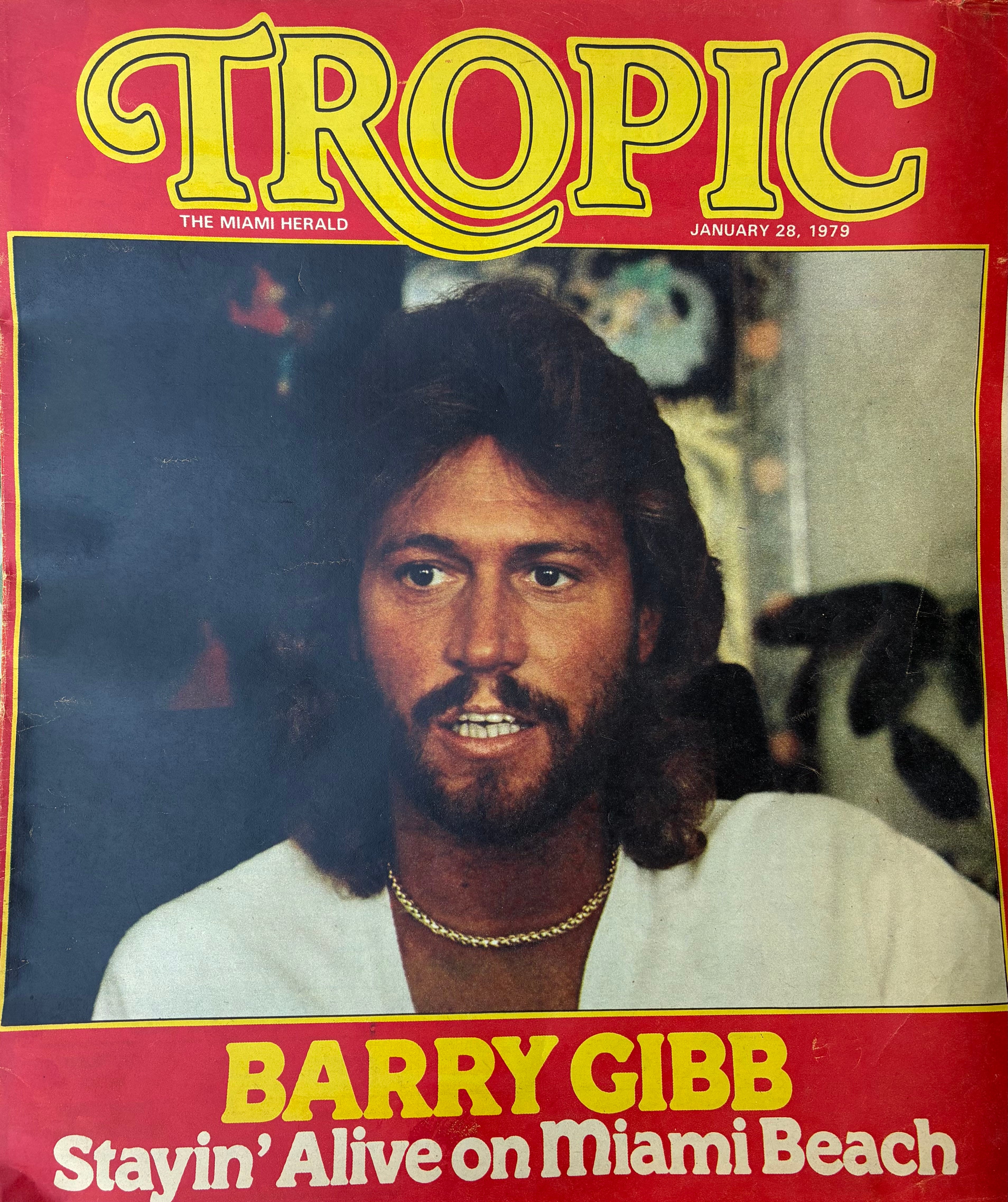
The first magazine piece I ever sold was an interview with the writer Harry Crews, a minor celebrity to be sure, but an author with a devoted cult following. A few years later, I was able to sell the same Sunday magazine, the Miami Herald’s Tropic, a cover story on Barry Gibb, who at that time was the biggest pop star in the universe. He and his brothers, the Bee Gees, had already ridden the highs and lows of the music business more than once and are now one of the supergroups with an insightful profile running all over the streaming networks.
I had been working at Miami magazine where, among other responsibilities, I would write and edit a front-of-the-book section called The Big Orange, which among other things covered the local explosion of the pop music recording industry, mainly at a North Miami studio called Criteria. I would hang around as often as I could, hoping to run into Crosby, Stills and Nash or Eric Clapton, the Bee Gees or some other A-list stars recording there. I never did, but I was able to develop a few contacts who kept me up to speed.
Barry Gibb and his brothers had recently moved to town for a change of scene and hit new career heights with the soundtrack album for Saturday Night Fever. Barry found a beautiful, waterfront home on Biscayne Bay, where he lived peacefully for a short time before the Herald ran a picture of the new digs, street number included. From that point on, fans would ring his doorbell several times a day, hoping to have more luck meeting him than I did at the studio.
He quit talking to the Herald after that, but I figured the freeze-out wouldn’t last long and I wanted to be the one to break through. I’d been a Bee Gees fan since their early days, and despite my initial, negative reaction to the disco craze, I learned from repeated listenings that Saturday Night Fever had a compelling, R&B groove that kept growing on me. I felt certain Tropic would want a profile of an international superstar who was now local. And the Herald had a Sunday circulation of about 650,000 – more than 10 times the number of readers I’d been reaching via Miami magazine. That sounded very good to me too. (For the record, the Herald’s daily print circulation now hovers around 12,000. Yes – three zeroes. The paper quit publishing Tropic altogether in 1998.)
I put in a request to the Gibbs' manager Dick Ashby for an interview with Barry, but didn’t hear back, despite my gentle but consistent follow-up. I finally got a break when a Criteria receptionist shared with me the secret location for a soccer game the band members and their colleagues were playing that week. I showed up looking like one of their roadies and was invited to join.
At halftime, I introduced myself to Ashby, who maybe was impressed that I had been engaging with them all for an hour or so and hadn’t bothered Barry. I got my interview a week or two later.
Tropic paid me only $500 for the story and photographs, including one used on the cover, but the editor let me make long-distance calls from one of the office phones to pitch reprint rights to Sunday magazines around the country. I ended up selling the Gibb piece a dozen times and wrote a shorter version for Us, my first national publication. The money I made helped me finance an exploratory trip to L.A., where I ended up relocating the next year.
The other night, I finally caught up with the 2020 Bee Gees documentary How Can You Mend a Broken Heart, mainly to see how much it added to the Gibb story that was such a turning point for me in the late ’70s. It was well directed by Frank Marshall, who’s produced films for the Raiders series, the Bourne series and many others, as well as a load of music-related docs. You’ll see his name on Rob Reiner’s Spinal Tap sequel coming out next week too.
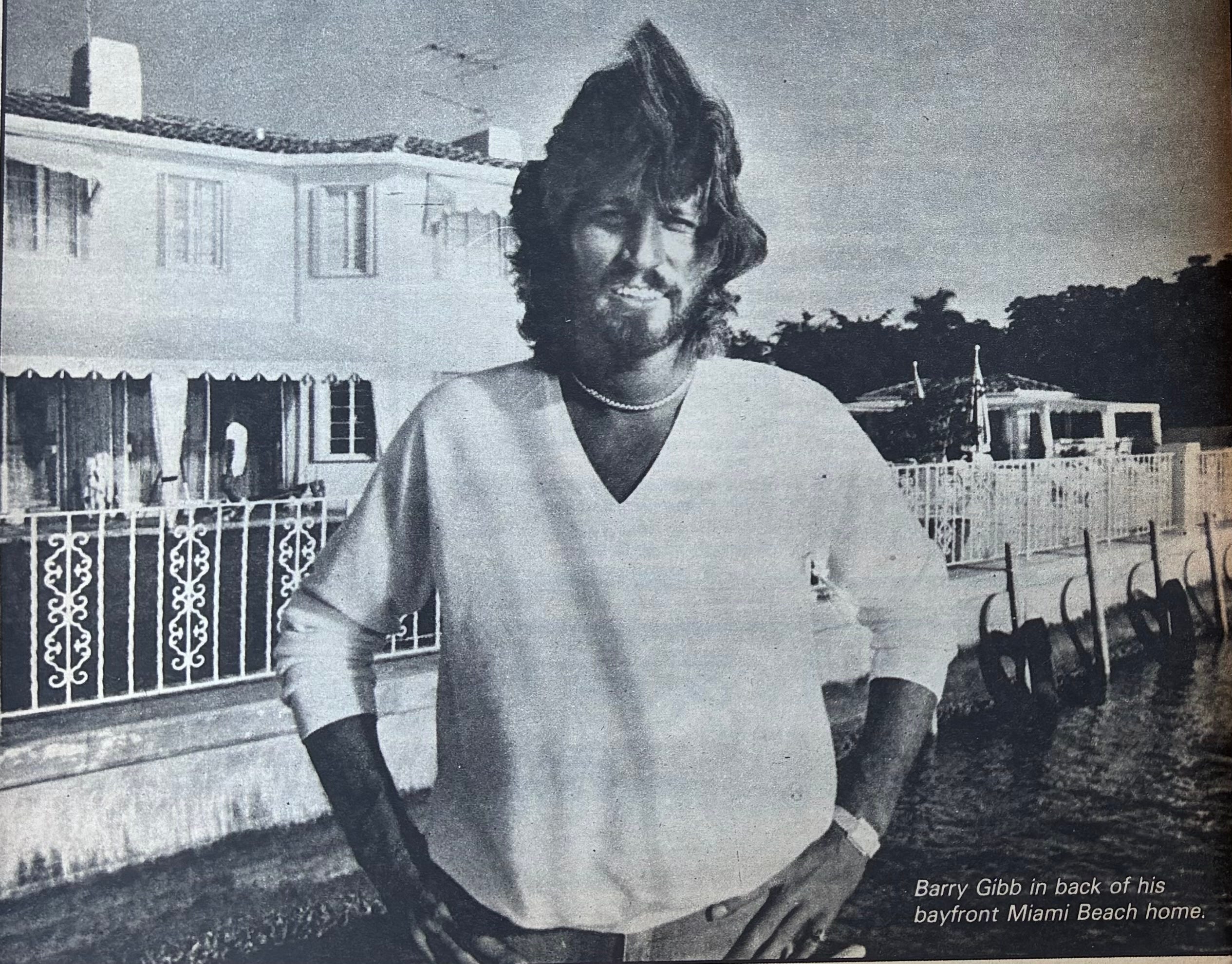
As popular and talented as the Gibbs were, their story saddened me, and I found an even deeper appreciation for the melancholic tone of their earliest hits. Barry, always the band’s spokesman because he was the oldest brother and had those movie-star good looks, has gone gray and makes no effort to hide how much he misses his closest artistic collaborators. He still writes and produces but has lost all his younger brothers, including Andy, who had a chart-topping solo career and whom Barry was grooming to eventually join the band.
The film featured new clips from Noel Gallagher and Nick Jonas, each a part of a different brother-band. It also showcased other family members and industry figures, as well as archival footage of Maurice and Robin Gibb, all of whom combined to give a resonant picture of what they went through, good and bad.
It’s a serviceable documentary – not at the level of Questlove’s Oscar-winning Summer of Soul or Sly Lives! about the brilliant Sly Stone. Nor does it approach the magnificence of Peter Jackson's eight-hour Get Back, which intimately portrays the Beatles during the making of their last album together, Let It Be. But it feels honest and fairly complete. I’d give it a solid C-plus.
If you’ve seen the Bee Gees documentary or any other recent music profiles, please hit Comment and weigh in. What have you really liked and why?
Great to know you’re a Crews fan. I took both his fiction classes at UF in the mid-‘70s and wrote about him for three different publications. Quite a character. And writer!
Thank you for a terrific column. I was never a BeeGees fan but I’ve been a huge Harry Crews enthusiast since stumbling upon The Gypsy’s Curse in the late 70s. It’s good to see his name in theoretical print.