

Play Ball!
It's that time again, for all life's troubles to fade into the background

Play ball!
Is there a more exciting decree in the English language than those two words?
They snap us into a new mindset, bracing us for action, to challenge and respond. Competition exists away from the baseball diamond to be sure, but nowhere else does it smell like freshly mown grass and sound like the buzzing support of an animated crowd.
And when all else is bleak, that simple directive, Play ball!, can shut out the world and focus one’s attention on the moment as effectively as a swami’s meditative trance or a muezzin’s call to prayer.
Major League Baseball’s Opening Day is Wednesday this season, with all 30 teams in action by Friday, and fans will once again hear that umpire’s command in big league cities and on TV.
I began umpiring youth baseball games last year and recently started my second season behind the plate and in the field.
It’s harder than it looks.
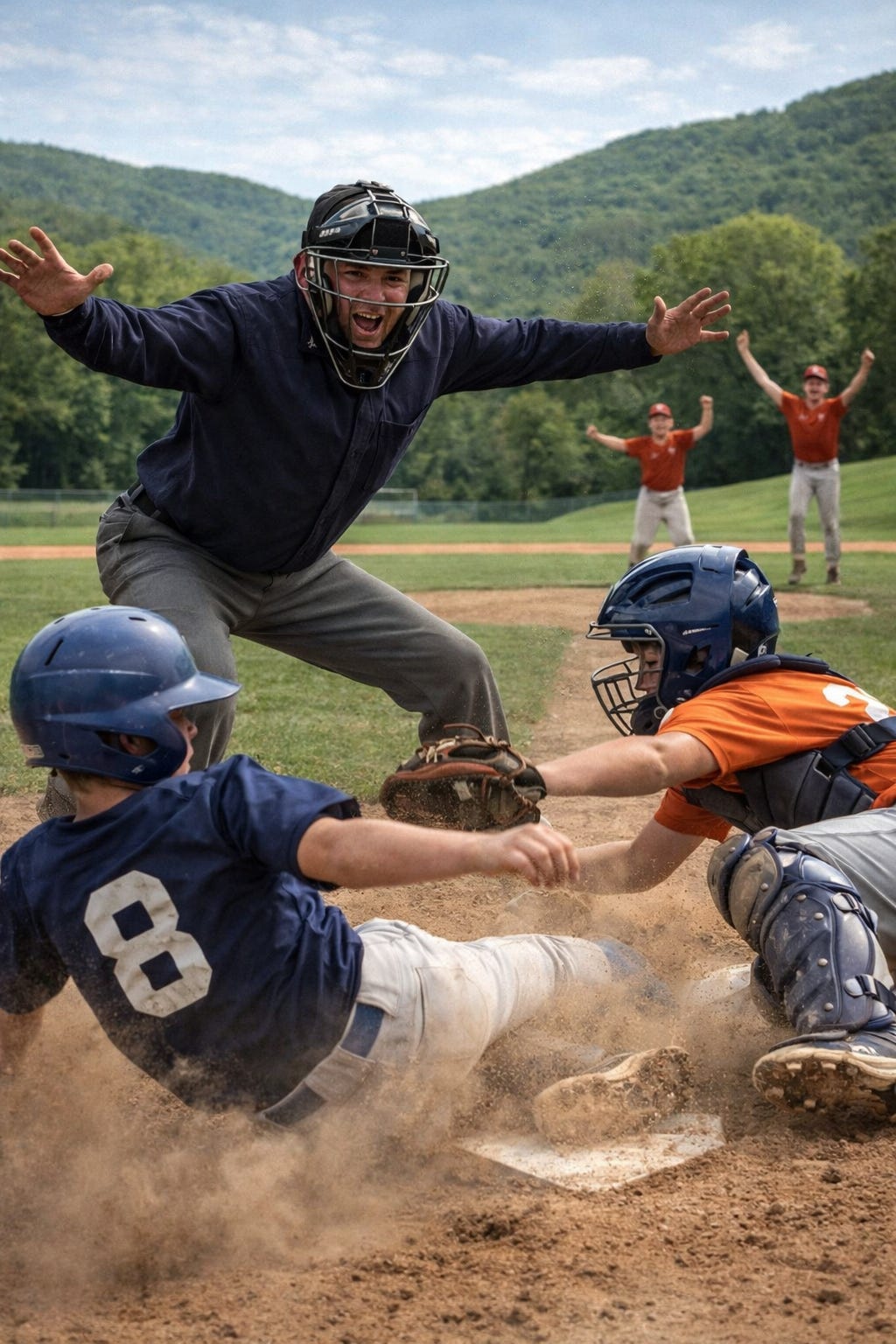
In Agoura Pony Baseball, where local kids play in parks and on school grounds nestled in the foothills of the Santa Monica Mountains, umpires train for eight weeks each year during their first three seasons. Some might consider it simple, involving only weekly, one-hour classroom sessions and a couple of weekend mornings in the field.
We’re instructed to read the Major League Baseball rulebook on our own, along with the Pony League rules for each different age level, and we’re tested on all of it.
Safety and fairness are the league’s bywords and the umpires’ responsibility. We’re also taught how to look the part, to project confidence, and to control the game.
Most of the umps are schoolkids, looking to make some pocket money and help teach baseball to younger kids in a fun, family atmosphere. More experienced, older kids and young adults usually handle the upper divisions, which go to age 14.
I’m one of only eight or 10 old-timers doing it in our league.
So what makes a grown man with a family and work responsibilities carve out time to help kids, ages 7 and up, learn to play organized baseball?
In my case, it started long ago with a love for the game, first as a fan, then as a player. I enjoyed all sports as a kid but had a special affinity for softball, then baseball, which I began playing in earnest in seventh grade, after my family moved to the Miami area.
I went to Coral Gables High, where the football coach at the time was the legendary Nick Kotys, a man who, when he retired in 1972, had led the team to six titles in that football-crazy state. Sportswriters crowned them national champions for four of those seasons. These were considered by some to be “mythical” championships, but nobody ever said that to Kotys.
I liked football, but Kotys’ teams usually fielded 100 or more players and required the kind of hard work and competitive drive that made college and the pros look like sandlot. I decided against playing football, and the team got by fine without me, eventually sending four of my 1971 senior year classmates to the NFL, where they were pretty big stars.
Clearly, baseball was my best shot at playing a high school sport. I was a good Pony League player, but not as good as my friend, Pete Manos, who was our team’s best pitcher and shortstop. I was facing him one day in batting practice, and I was swinging the bat pretty well, smacking the ball all over the field.
Then Pete gave me a devilish smile from the mound, which I was trying to interpret as he went into his windup and threw the ball right at my ear!
In the half-second it takes for an 80 mph pitch to reach home plate, I had time to wonder what the hell had gotten into my friend Pete. I bailed out of there… and watched his curveball break right over the plate for a strike. I had seen weak curveballs before but nothing like this. That was the end of any serious baseball aspirations I might’ve had.
Still, I wanted to make the Gables team, which I failed to do in 10th grade. But by the next year, I had grown a little and was able to make it all the way through the final cut.
Nick Kotys didn’t coach baseball, but he was the school’s athletic director, so all teams reflected his work ethic and demand for excellence. Which meant, among other things, we did a lot of wind sprints.
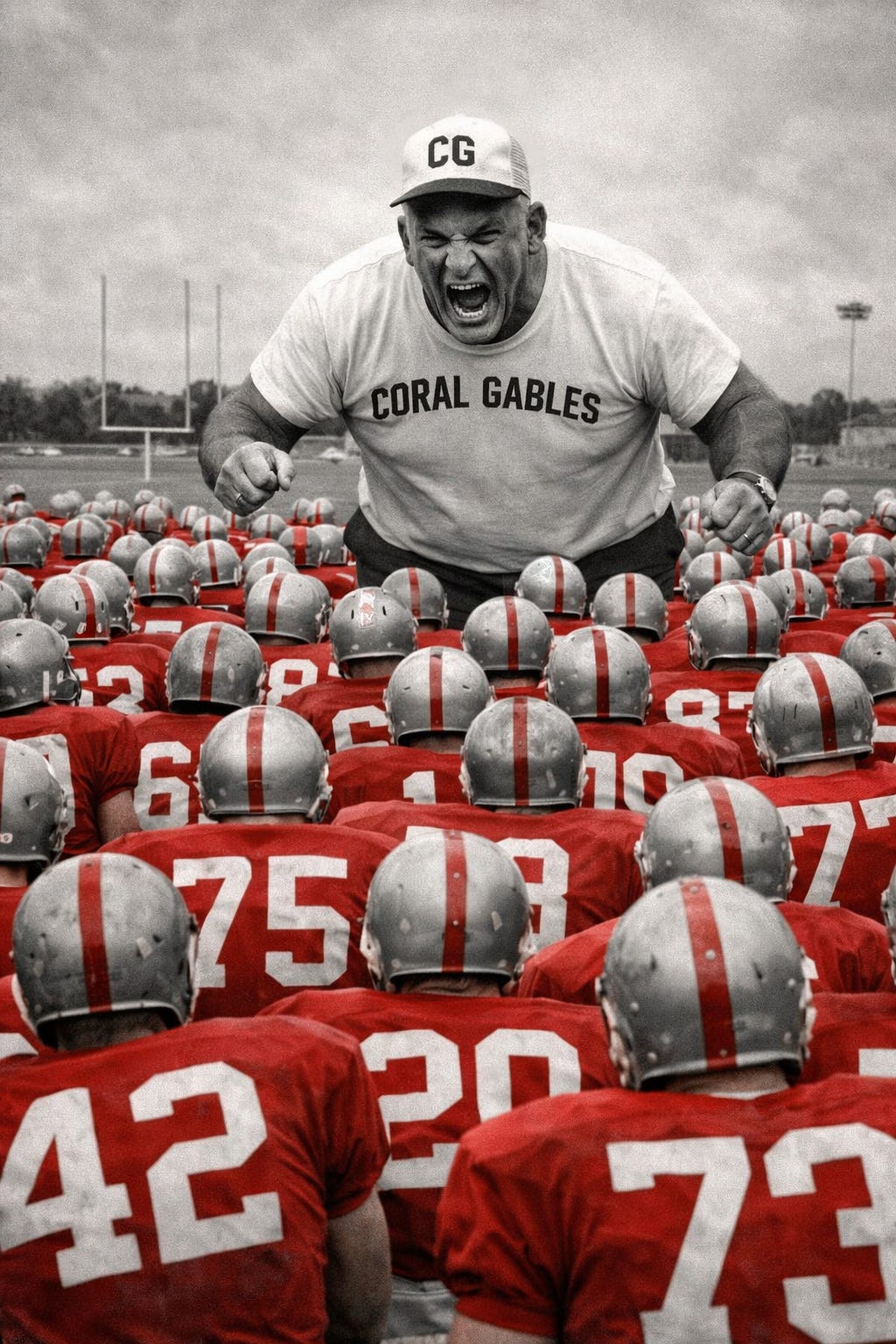
If you’ve ever done wind sprints in the Miami heat and humidity, you’ve probably gotten away with giving 80 or 90 percent effort for each 50-meter dash performed in rapid succession, with only 30 seconds of recovery time in between. That didn’t cut it in Kotys’ program or on Coach Sam Scarnecchia’s baseball team. We went all out, or we went home.
I had to make that choice pretty much every day.
One of those days, I was trotting out to the practice field after school – one did not walk to practice at Gables High, something the Agoura Pony Leaguers might do well to learn – and I passed Coach Kotys, who was standing in the outfield surveying his domain. This was 1970, and my hair may have been a little on the shaggy side,
“I didn’t know Coach Scarnecchia allows girls on his team,” Kotys called out as I jogged past.
And do you know what I said?
Nothing, are you kidding? This was Nick Kotys, and I was 16 years old. I just kept on jogging.
But I got his point, and in his own, Neanderthal way, he was right. I hated wind sprints, I couldn’t hit a good curveball, and I had only gone out for the team to prove to myself that I could make it. What I did not prove — or care to prove — was that I had the will and desire to work hard enough to succeed on that team under trying conditions.
That was my last day as a Gables High athlete. I lacked the maturity to quit to Scarnecchia’s face, so I just never came back. It’s not something I’m proud of, but baseball can be useful that way. It has a knack for showing you who you are.
I later became an avid softball player, raised two sports-loving kids, and helped coach their teams, including a couple of seasons in Agoura Pony Baseball.
And still, I kept playing.
By my mid-60s, with a slight limp and slower reflexes, I had to admit I was no longer much of an asset to my high-arc team, mostly guys in their 30s and 40s.
When a non-softball injury cost me a season, I knew it was probably time to hang up my orthopedic cleats. But I couldn’t entirely give up the game.
So now on any given day outside school hours, you might still find me on the diamond — the old guy with the bad knee, keeping the game safe, fair, and moving.
Play ball.
Good 'un ... although, since you are an ump, I thought you might chime in on the new Automated Ball-Strike Challenge Sytem that is making its debut in MLB this season. I don't love the idea ... but then I didn't like the DH when it was introduced.
Excellent piece definitely sets the mood for the season..say, amid all the NFL talent to come out of Coral Gables, did Pete Manos ever play pro ball and how close to the bigs did he get? Any other baseball players out of Gables?