

Fun with fraudsters!

As the renowned lyricists Norman Whitfield and Barrett Strong wrote for Motown in 1966 —
People say, “Believe half of what you see
Son, and none of what you hear
But I can't help but be confused
If it’s true, please, tell me, dear
I recently saw a report on Facebook of Mario Cristobal, the University of Miami’s football coach, stunning a room full of billionaires at a Los Angeles gala by telling them they need to donate part of their wealth to charitable causes.
I don’t know much about Cristobal outside his success at UM, but common sense told me this was ridiculous. Why would a football coach be brought across the country to talk to such a group, and why would he deliver such a pro-social message? Doesn’t he ever want to get invited anywhere again?
I checked with Google Gemini, which first implied the event actually occurred because there had indeed been social media reports about it, but upon further questioning reversed course and acknowledged there was an extremely low probability those reports were real.
I’ve since seen many other bogus Facebook posts on different subjects from various providers (that’s what I get for clicking on the Cristobal item) and have judiciously blocked each one. But what’s the point? The bullshit keeps flying around faster than most of us can get out of the way.
Scammers and charlatans have always searched for new ways to trick the gullible. Now AI is helping even those who don’t speak good English do it in ways that society might perceive as less harmful than outright theft. Who even knows what their precise business model is? Clearly, it has to do with using algorithms to gain clicks, which can be monetized in any number of ways in our attention-based economy.
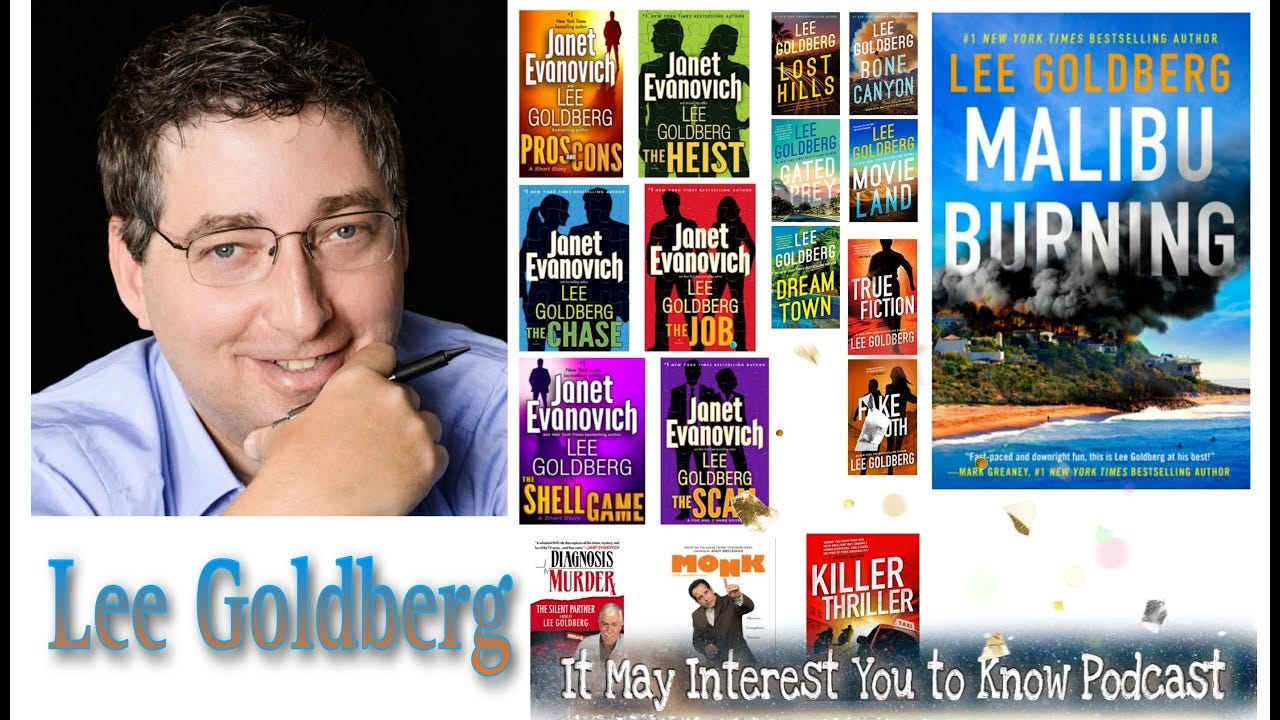
My friend Lee Goldberg has a different but related issue and deals with it in a manner many of his thousands of Facebook friends find amusing. As a prolific, New York Times bestselling novelist (and also a longtime TV writer/producer), Goldberg is constantly targeted by emailers who assume the identities of other prominent writers, trying to strike up virtual relationships with him to exploit in book marketing scams.
To be clear, these scammers are allegedly attempting to do much worse than spread “harmless” misinformation on social media. An ambitious prosecutor might say they’re committing investment fraud, which if successful, is punishable by up to 25 years in federal prison.
Most of us would probably block and ignore these people, but Goldberg says some writers, especially newer ones, are vulnerable to such attacks. He enjoys engaging with the scammers until he humiliates them and publishes verbatim copies of the correspondence on his Facebook page and his blog in order to raise awareness among possible future victims.
He’s given me permission to re-post parts of those conversations here.
Around Christmas time, he told one correspondent, who was pretending to be the clinical psychologist and non-fiction writer Lindsay Gibson, that he was really glad to hear from her for a reason I’m sure she didn’t expect.
“My fellow authors have been avoiding me ever since I lost my testicles in a tragic tree-trimming accident,” he wrote to the fake Gibson. “It’s so mean. It’s not as if what happened to me is a virus they can catch if they visit me in the hospital.”
Goldberg told the fake shrink and author that he intends to write about his experience and asked if she thought his story has a chance of connecting with an audience. “I do worry a lot about how this accident will impact my sex life and my sense of manhood,” he wrote, “but on the plus side, my singing voice has improved.”
The fake Gibson appeared to take him seriously and spewed out many words of sympathetic, writerly prose before turning the conversation toward marketing: “Are you doing anything special to spotlight [your work] for readers who are searching for thoughtful, heartfelt books at this time of year?”
Goldberg responded that it didn’t feel like a real Christmas book to him, though he allowed that Jingle Bells might be a good title. He never heard from the fake Gibson again.
Others are more persistent. One writer, pretending to be the novelist Ann Napolitano, protested when Goldberg clearly pointed out he had her number.
Goldberg: Let’s be honest, you are not Ann. I ran your email through an AI-detector, and it came back positive. So I am curious. Does pretending to be a famous author, and recommending people to a “marketing expert” in Nigeria, really work for you…?”
Confronted with this, the fake Ann admitted he/she/they were not the real bestselling author they were impersonating, said there was no intention to mislead him, and went on to shower him with all manner of apology, respect and praise for his work, couching it in a couple of hundred words of flowery, AI-sounding language.
Their conversation ended this way:
Goldberg: If you did not want to be mistaken for Ann Napolitano, and if you “take trust seriously,” why are you using her name and profile photo? And why are you using AI to write your emails? It defies common sense. Why continue to pretend this isn’t a scam when you’ve been thoroughly exposed as a fraud…?
Fake Ann: FUCK DOG YOU.
I’m guessing the scammer didn’t use AI for that one.
Goldberg says many aspiring writers reach out to thank him for helping steer them clear of disaster. He says he sometimes uses an actual plagiarism-detector that he borrows from his daughter, a schoolteacher, to confirm his assumptions, but usually he can tell on his own when posts and emails are bogus.
He even sometimes asks ChatGPT or Claude if posts seem to have been composed with AI. They always confirm his suspicions and identify specific giveaways.
In any case, the reposts of his conversations are usually pretty entertaining. I’d recommend his blog or his Facebook page, but I don’t know if he’s taking new friend requests right now.
If he accepts you, just don’t try to sell him anything.
A public service, Eric. I know someone who ordered a supplement endorsed in a convincing video by the CNN medical correspondent Sanjay Gupta. Only it was totally AI. I also saw a video of Steve Martin hawking a product. The voice wasn't totally Martinesque, but close, and the technology only gets better. More to the point, I get 3 or 4 emails a day like the ones your friend Lee gets. Some are from "authors," both famous and unknown, who just want to talk shop with another author. Others are from marketing experts who praise one of my books to the skies and offer to help me reach more readers. They all sound as if they've read the book in question and love it to death, and the descriptions of the books' contents are quite accurate. All obviously AI generated from whatever is online about the books--press releases, reviews, maybe even the books themselves. If I wasn't old and jaded, I might have fallen for one of them, and I'm sure new authors, especially self-published ones, are susceptible.
Love this! It’s really astounding what I see now. And I’ve come to not believe anything. :(