

Are we ready for The Change?
Movies are running against authoritarianism, and losing

Has anybody else noticed that a bunch of new or recent movies are consumed with the fall of U.S. democracy and the horrible consequences of such a decline?
How could such a distasteful trend come to be?
One Battle After Another and Anniversary hit the political theme head on in ways I’ll discuss in a minute. House of Dynamite and Zero Day deal more with its after-effects — imminent threats of mass casualties due to the failure of our leadership.
Two years ago a couple of relative neophytes in the film industry, Barack and Michelle Obama, got the ball rolling with Leave the World Behind, a film they executive produced based on a book that had made the former president’s widely heralded summer reading list. And last year, Francis Ford Coppola even got into the act in his big, blustery way with Megalopolis, a movie few critics liked or completely understood, yet I worry it may come to be mistaken for a documentary by future generations.
Already, this new wave of broken-democracy movies is threatening to become an enduring phenomenon like the spate of zombie films, TV shows and video games that recently rose from the dead, or the comic book superhero movies that boomed in the Reagan years and then got super-charged in 2008 with the creation of the Marvel Cinematic Universe.
All of the titles mentioned above can be thought-provoking film experiences and sometimes even gripping thrillers, but only one of them is very much fun.
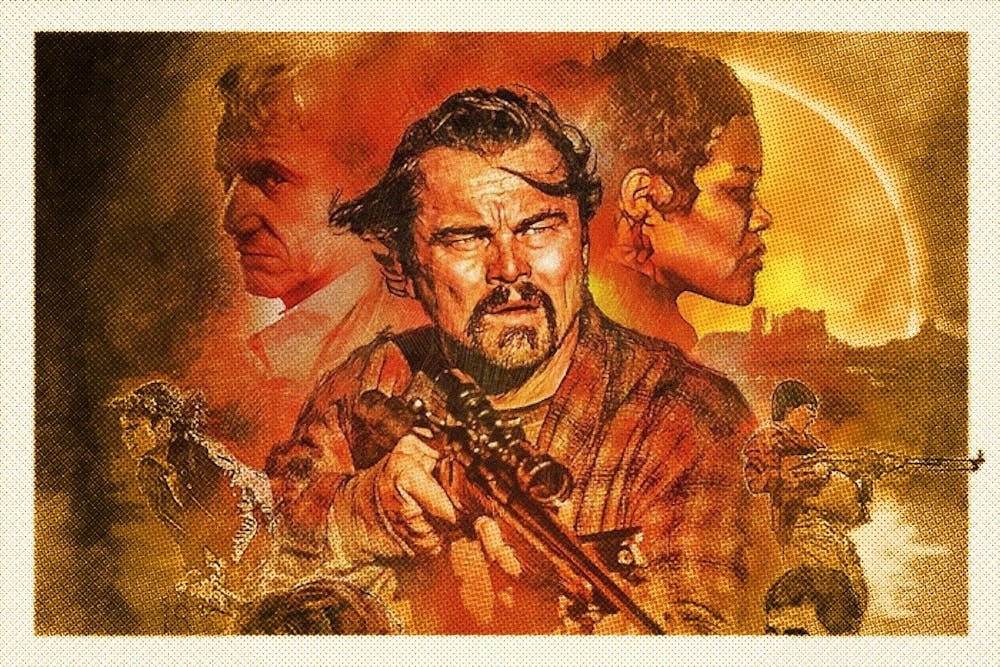
One Battle After Another is that exception, largely because of its performances. Star Leonardo DiCaprio pops off the screen with an almost Lebowski-esque portrayal of Bob, a militant revolutionary-turned-stoner dad; and Sean Penn gets even further out there with his Col. Steven Lockjaw, who moves like a malevolent Popeye and has the forearms to match.

Writer-director Paul Thomas Anderson makes it all work by taking a slam-bang story of intensely personal and political antagonism and somehow infusing it with an ironic sense of humor. Anderson may or may not have lifted that tone from Vineland, the Thomas Pynchon novel he based the film on. I read the book in 1990 when it came out, but I have to admit, don’t really see the resemblance. (Whether that says more about the movie or me is anyone’s guess.)
DiCaprio stars as a former militant activist now calling himself Bob and getting high on a daily, if not hourly basis, while raising his daughter Willa in a northern California suburb. It’s quite a retreat from his life on the front lines of a burgeoning civil war, but he’s got a strong relationship with Willa, and retirement suits him well.
Penn amps things up as Lockjaw, who’s in lockstep with an all-powerful group of white supremacists known as the Christmas Adventurers Club. They offer him membership if he can prove his allegiance to the mission of U.S. racial purification.
Lockjaw would certainly belong, but there’s a problem: 16 years ago, he forced Bob’s lover, a black revolutionary woman, to have sex with him. Now he must prove himself to the Adventurers by killing Willa, a high school student, who may be the product of that union.
That’s all the plot you’re gonna get from this column. It’s a complex story filled with thrilling action and elevated by interesting characters and great actors bringing them to life. Chase Infiniti, who plays Willa, will be on every producer’s A-list from now on, and not just because she’s got that cool, movie star name. Write it down.
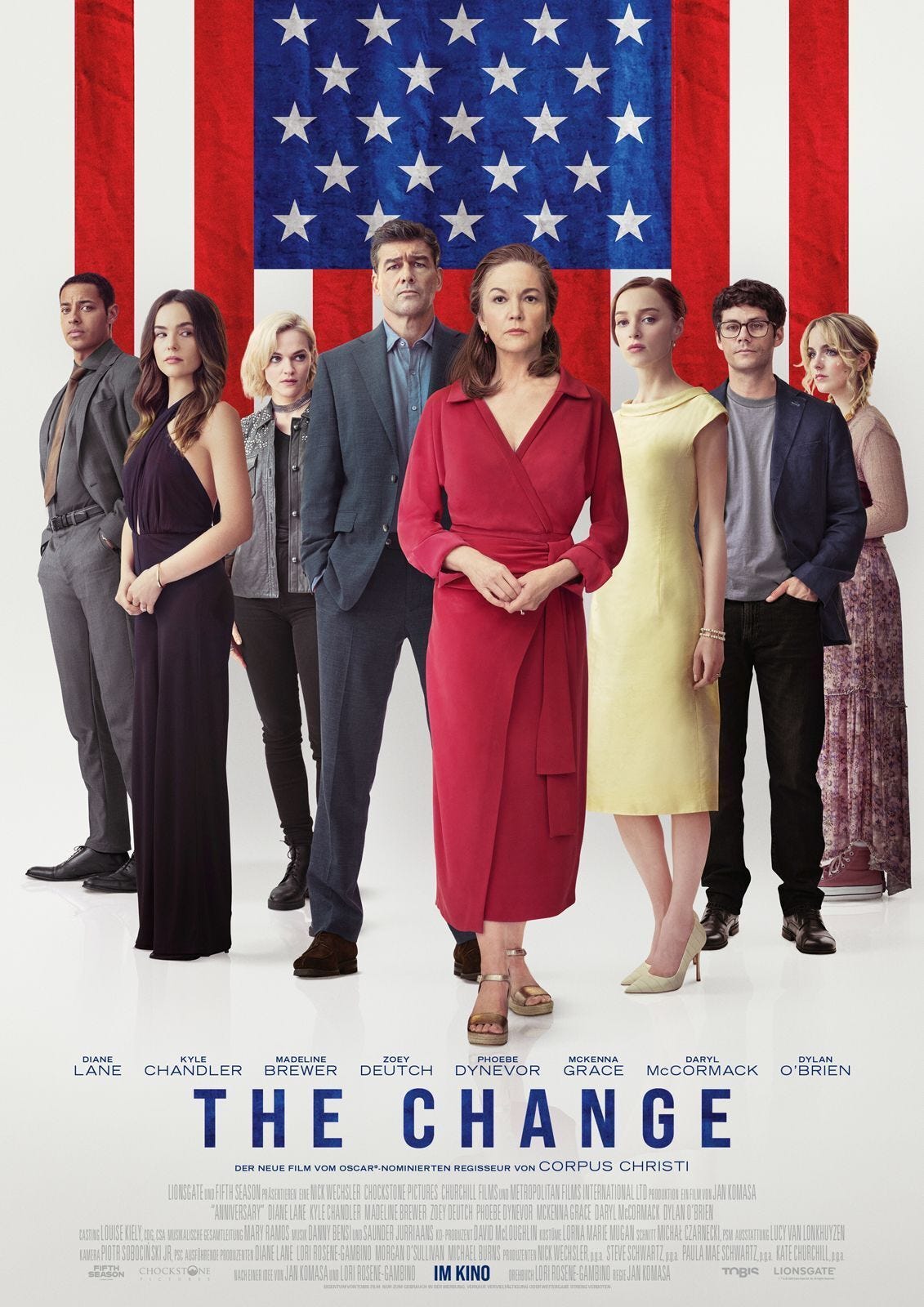
On the other side of the coin, we have Anniversary, which if you’re not at least industry-adjacent, you may not have heard of, supposedly because the studio was scared to invest heavily in promoting a film that was so overtly political and anti-authoritarian in today’s repressive media climate.
Either that, or they didn’t think it would do much business. We’ll never know for sure, but the crowd I caught with at a Calabasas screening last week seemed to love it. I did not.
The movie explores the dysfunctional relationships within a wealthy, intellectual family in the D.C. area over five years, beginning with a 25th anniversary celebration at the parents’ Virginia home. Diane Lane plays Ellen, the mom, a liberal, political science professor at Georgetown who, years earlier had harshly denounced a student’s thesis as disturbingly anti-democratic.
Now, the former student, Liz (Phoebe Dynevor, from Bridgerton), shows up at the anniversary celebration as the fiancee of Ellen and Paul’s son, Josh. Whether this is a strange coincidence or Liz had schemed her way into this position to get back at Ellen is left unclear. The important thing is, Liz has expanded the thesis that Ellen hated into a book that advocates for the U.S. to embrace a one-party system, a book that has caught a wave and become a viral best-seller.
The book is called The Change, and man, are we in for some of that.
There are three other siblings in the family, too, including one sister played by Madeline Brewer, who was Emmy-nominated for her role as Janine Lindo in The Handmaid’s Tale, another story of worst-case social scenarios. Almost every character in Anniversary is extreme in their views and intolerant of each other, including, eventually, even the married couples.
Ellen and Liz lead the way with their zealotry — Liz as a surreptitious manipulator, and Ellen as a walking, high-energy, nervous breakdown. Their movie succeeds in depicting the dangers of an authoritarian government, but these are not characters I enjoyed spending time with.
How long this run of why-can’t-we-all get-along movies will continue I don’t know, but I hope we put an end to it by the next presidential election. The bullshit coming from Washington is bad enough. We don’t need to see it from Hollywood too.
Eric.. thanks for the heads up. I cannot gin up the energy to see any of these films,
I liked "One Battle," but what do I know I also liked "Megalopolis." The best of the bunch was "House of Dynamite," though, echoing the great "Fail Safe." The dystopian is an evergreen genre, not going away like ever.